
The shaping and mark-making involved in creating a statue out of clay or wax is called modelling. Anything that can impart shape or texture to the clay can be used as a tool, and some of the fun of being a sculptor can include the selection of which modelling tools are your favourite, and discovering improvisations which create special marks.
Along with the tools we use, sculptors need several things – light, a rotating work surface, hands both to model and to use those tools, a dedicated space, an armature, and reference material.
A sculptor needs:
– Light: A balance of light, which can be controlled throughout the day as natural light coming through windows changes strength and direction.
– A Rotating Work Surface: Such as a turntable or a modelling stand, so that the piece can easily be spun, to reduce errors that creep in when working too long on one view (and not monitoring the effect on the others).
– Hands! We all have them, but some of us like working with them more than others. Hand cream is a must when working with clay for long periods, as the moist clay actually dries out your skin.
– Hand Tools: Such as the modelling tools that make it easy to create a curve, or detail a section of the statue without spoiling the adjacent marks.
– A Dedicated Space: The space, however small, needs to be yours, as a sculptor is always making a mess dropping clay or wax, and equipment or works in progress can be substantial (at least compared to 2d art).
– An Armature: A structure to support the modelling material.
– To Manage the Clay or Wax: It is important to manage the consistency of the sculpting material: so a variety of cloths, plastic and spray bottles to keep clay from drying out. Or hot water bottles & hot plates to keep wax nice and maleable.
– Reference Material: In all its exciting and inspiring forms, reference material has to somehow make its way into the studio to inform your sculpting, unless, like an elephant, you never forget.
Light
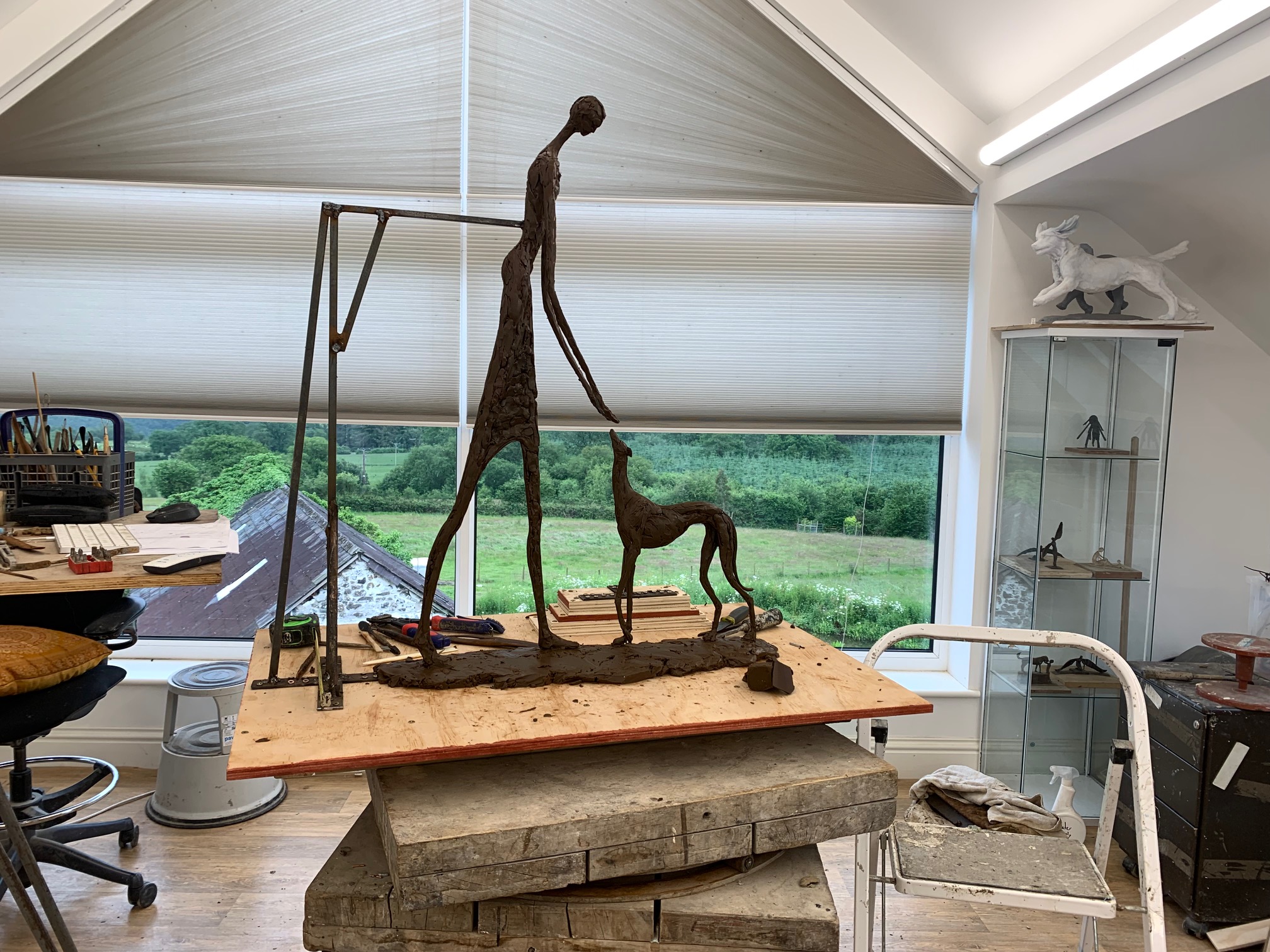
Clay or wax is normally a monochromatic surface, so a balance of light is essential for the sculptor to see what they are doing. My husband makes fun of artists for wanting as much light as possible, only to spend much of the time with the blinds down on the windows and half the artificial lights swithched off!
A Rotating Work Surface
Not only can you tire yourself or strain yourself leaping up and down, or leaning around your sculpture…rotating a piece allows you to check that the clay you’ve just added or altered in one place hasn’t made the other sides stop looking good. Modelling in three dimensions isn’t just about spinning the statue horizontally either. It involves raising things up and down too – which is why modelling stands have adjustable heights, and why single height modelling surfaces (most often used when sculpting on larger pieces) involve jumping up and down on stools and ladders.
Hands
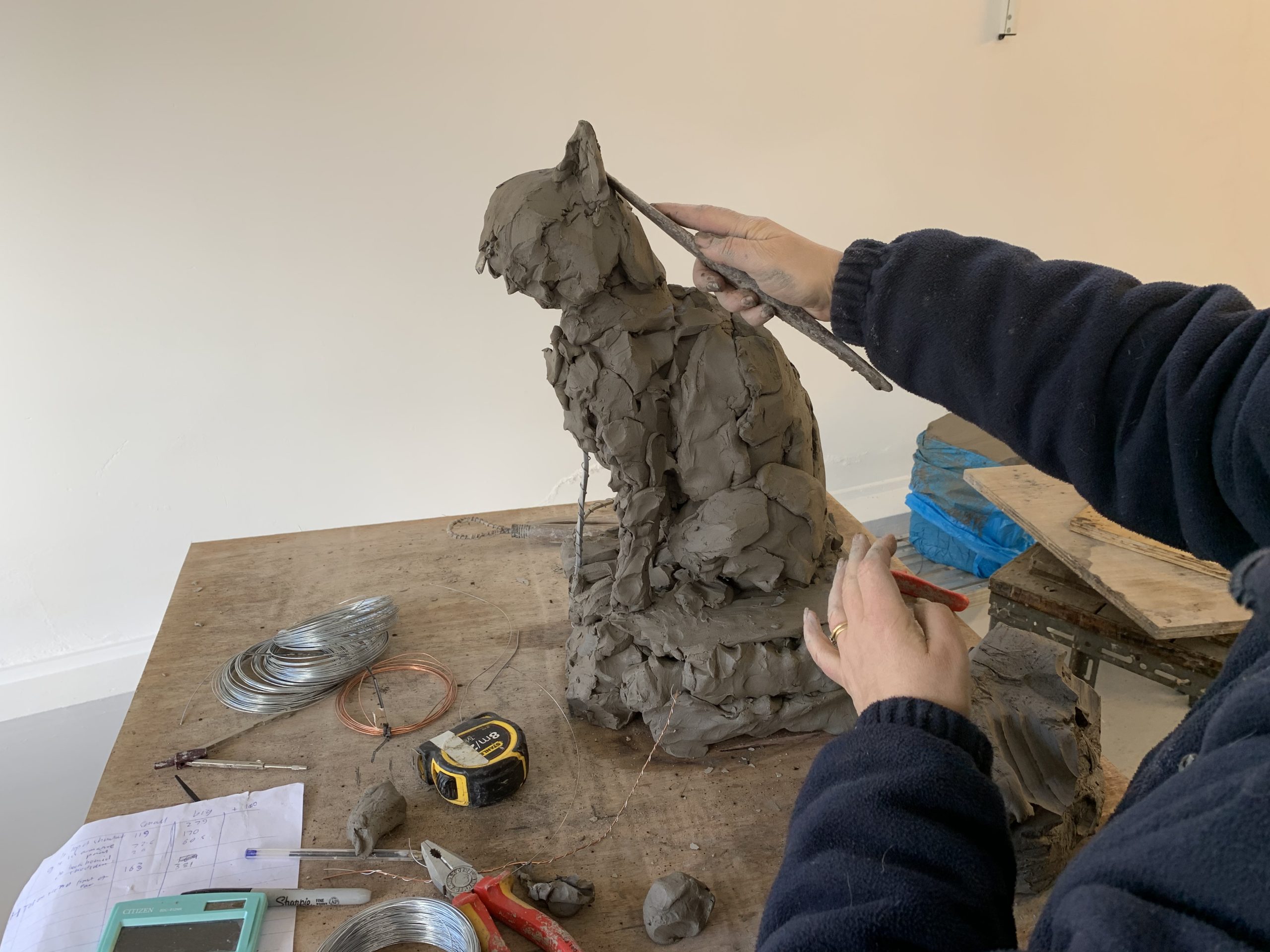
Hands are the most basic hand tool! Used since we discovered decorative shaping and notching as cavemen, the hand creates tactile, large, recognisable marks with a lot of authenticity. But they are not multi-tools – good luck working on small details with your chubby fingers. Plus, the longer you use them, the more they suffer, bruised, spiked on chicken wire, cut on steel burs, and eventually arthritic – hands are worth protecting. And after all their biggest strength is that they can manipulate hand tools in all shapes and sizes!
Hand Tools
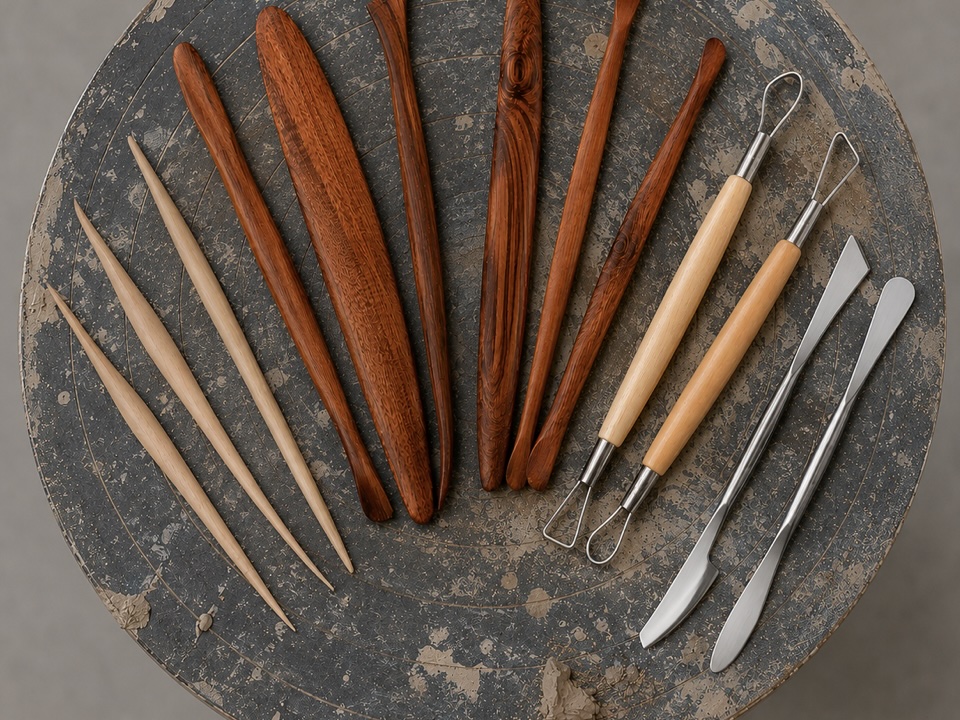
Manual or electric, there is a tool for practically any job, and plenty of things that you can improvise with too. The basic ones are called modelling tools. Most commonly, little, manual, carved hardwood tools are popular, with points or curved ends, scoops and notches. Many are available in steel, but the wood ones tend to be available in a greater variety of shapes and sizes. The thinner wooden ones also have a little flex, certainly compared to the metal ones! Metal wire tools, (which have a loop of wire at the end), are great for cutting away clay, and I’ve made some of my own from wood and wire to achieve larger tools with different textures on the cutting edge than are available on the market.
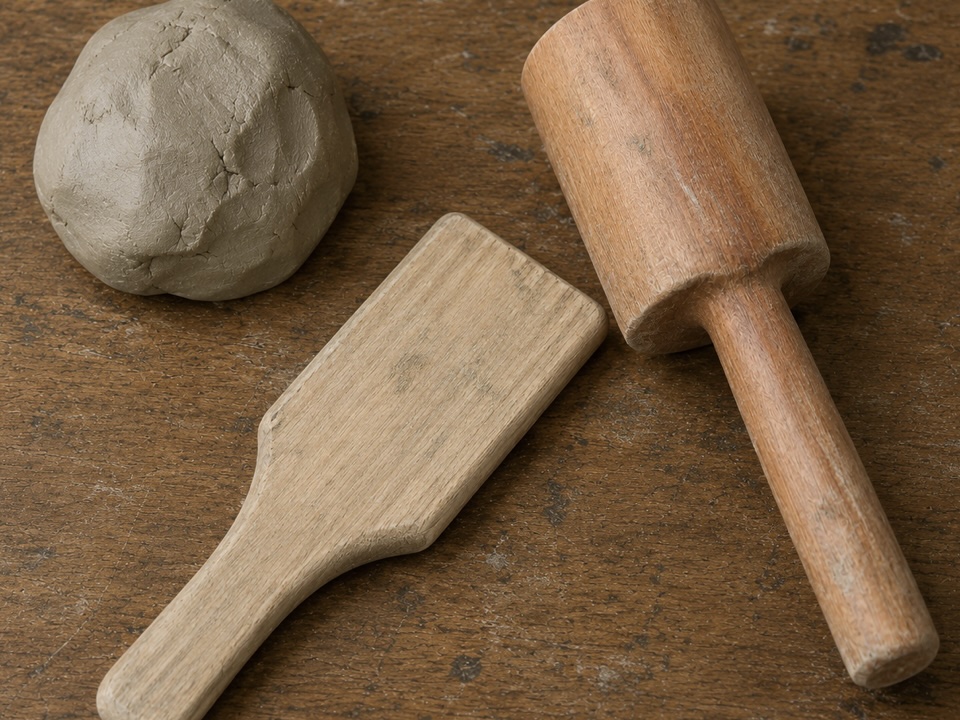
Tools for bashing are surprisingly important! Getting the clay onto the armature before you start modelling takes a fair bit of bashing with a mallet to join the lumps of clay you are applying. Many of these are improvised and range in size, but they are often shaped like paddles, with a handle and a wider surface for whacking!
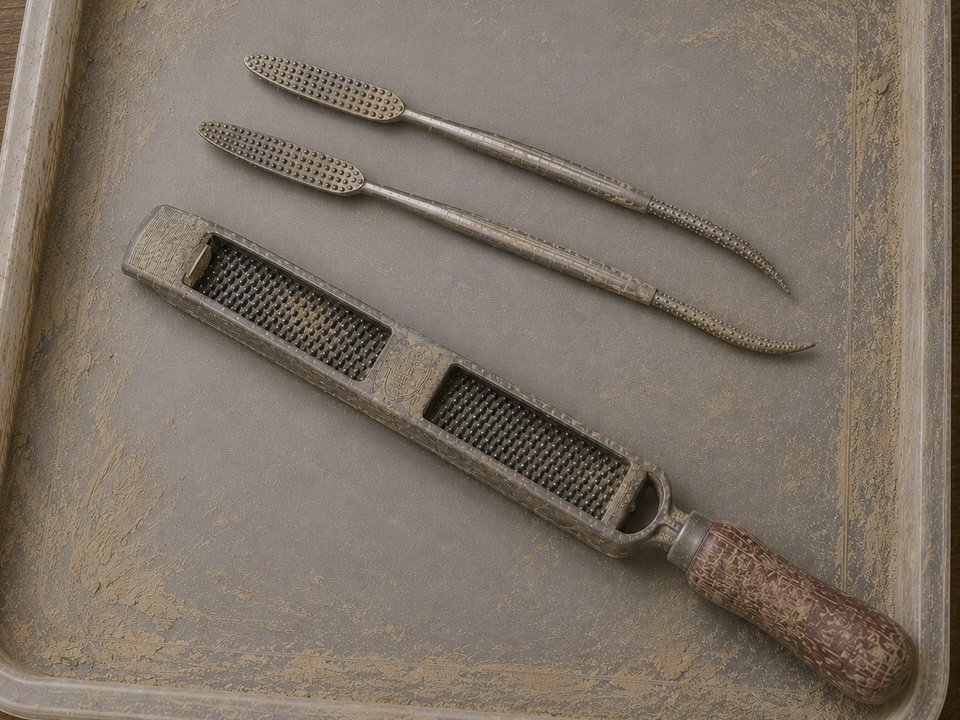
Texturing tools like rifflers (which have nobbles) and rasps (which are likes cheese graters) are available in metal. But this is also an area where the artist’s creativity can really shine. There are plenty of natural or manufactured surfaces that can be used to texture clay, whether from pieces of bark or stone, to the impressions from oddly textured industrial objects or misappropriated tools.
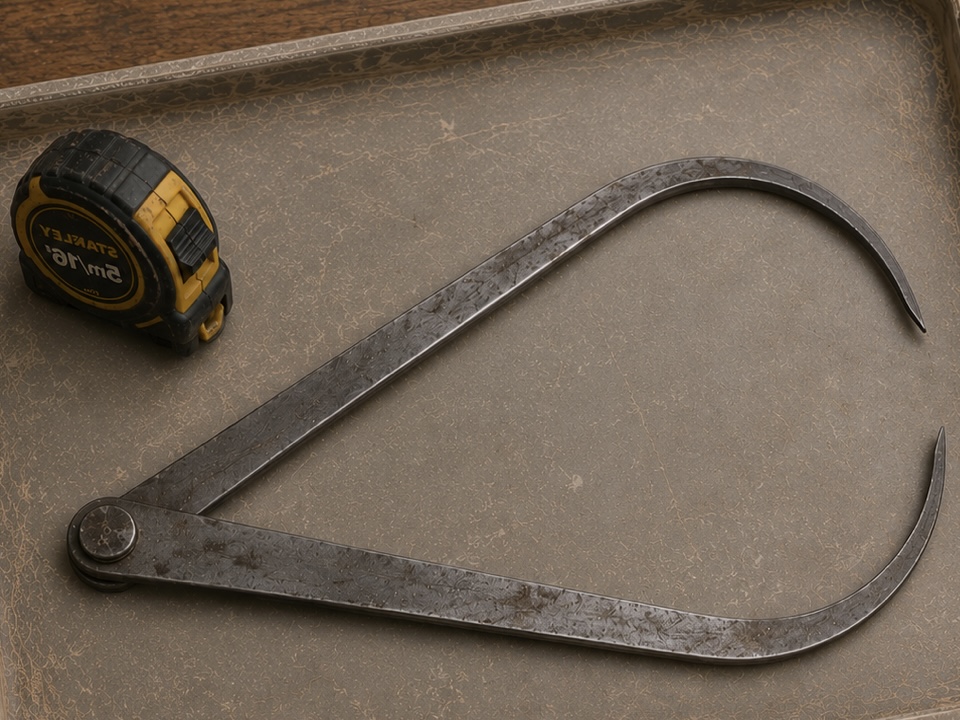
There is a supporting cast of tools that are used for measuring. Half of sculpting is checking, amending, and then checking again, so measuring tapes are joined by callipers for measuring between two points when there is an obstruction between. You can even get ultra high tech and invite laser levels into your studio, or 3d scanners (but let’s not get too excited – 99% of sculpting can be accomplished with method, rather than expensive new tools).
A Dedicated Space
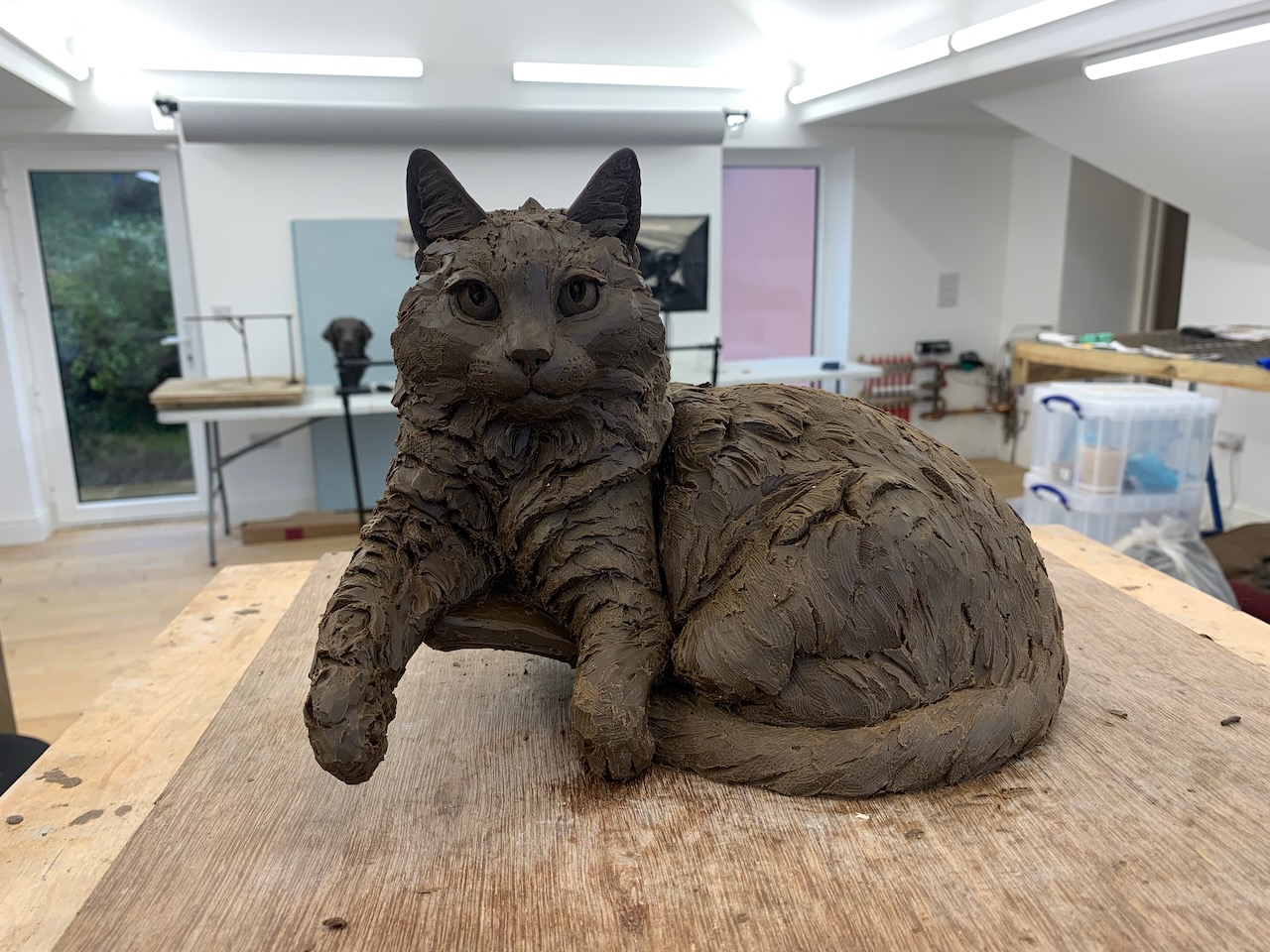
When I apprenticed under my parents, I sculpted in a huge studio, and when students came to the college I set up they learnt to sculpt in large classrooms. At home, though, I used a 2.5 metre (8 foot) room for years, and it could be tough! Space definitely limits the size of your work. And that’s before even thinking of the moulds, materials, equipment and sculptures that all need space to be stored! I envied painters. However, with work comes opportunity, and now I have a variety of studio buildings of different sizes for different scales of sculpting. Whatever the size of the space, however, the principle is the same. You need to be able to leave work out so your project isn’t constantly interrupted, and you need to be able to move around your piece to sculpt and to manage the material.
An Armature
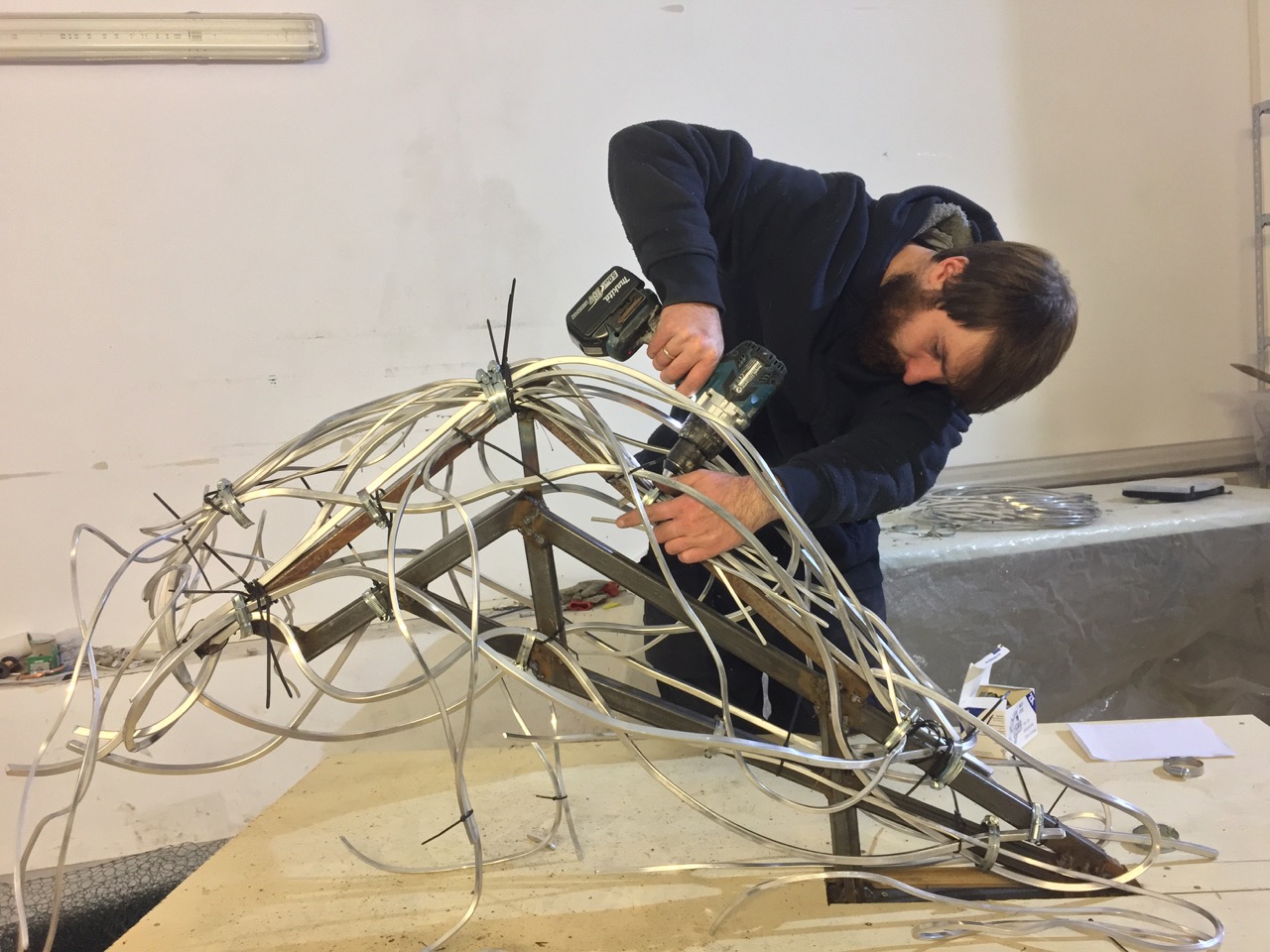
I talk a lot about how I build an armature elsewhere. I prefer a steel internal skeleton for strength (sometimes with an external steel support), with aluminium wire over the top to give flexible support in the extremities. I add chicken wire and sometime polystyrene packing, to prevent the clay getting too thick (it doesn’t self-support, it simply falls off, so a thinner layer is better). But I have known people who build these out of wood, or chicken wire or polystyrene internal shapes – really this is a matter of what you can manage, and what kind of support is needed.
Manage the Clay or Wax
Modelling clay dries out and cracks, so a sculptor has to keep it moist, using a spray bottle to apply water, plastic to prevent the water from evaporating, and a cloth in between the clay and the plastic, to prevent condensation creating overly wet sections.
This is why a variety of waxes are available, which do not dry out. Some are a soft consistency, which is easy and quick to sculpt, but doesn’t move the same way as water-based clay when it is applied (due to the ‘stickiness’ of the oil-based material). Medium-hardness waxes can be better in higher temperatures than soft waxes, as they are stiffer. But this stiffness requires managing when sculpting, and heating the wax with a hotplate or a water bottle can make it easier on the hands, and easier to work.
Reference Material
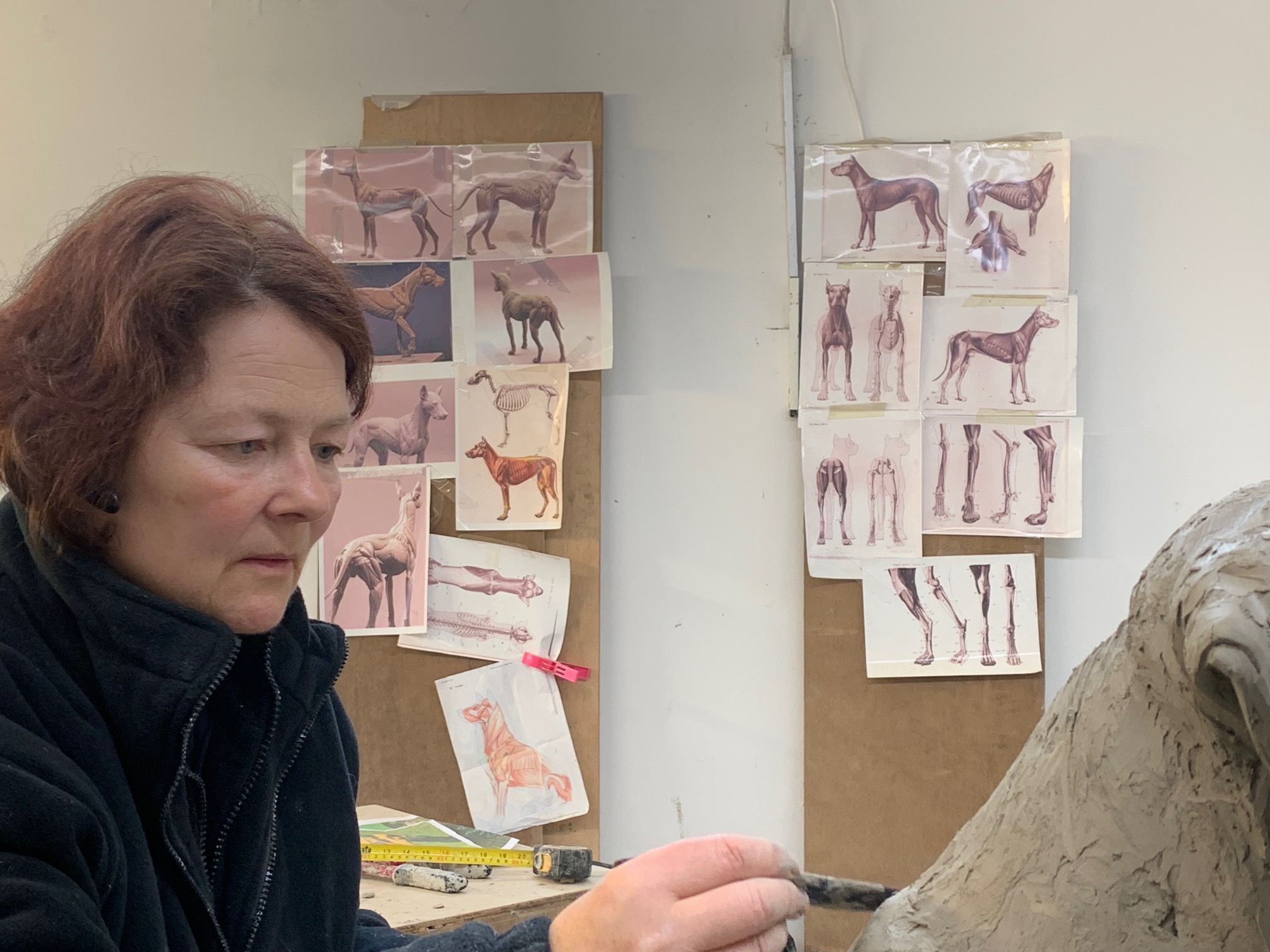
Reference material varies a lot, it can be anatomical drawings, photos or video of your subject, photos and video of inspiration, or the subject itself present in the studio with you. My mum has some wonderful photos of horses and donkeys in the sculpture studio with her! But there are lots of ways to help your sculpting. I know an artist who blows up photos to life-sized to have behind the sculpture they are working on. Most of us however might make do with a sketch, or a 3d maquette (small model) to reference and take measurements from. As a dog sculptor, I like to reference my dogs paws and anatomy, it’s an excuse to have more dogs! The easiset set up is to have a computer on a rolling table, and/or a tablet in a protective case.
Follow The Artist
Keep up to date with Tanya's latest work!