Link to The Times article, 2026.
Pet Portraits: with Tanya Russell, Questions by Art Historian and The Times contributor Dr Louisa McKenzie (Instagram)
“Can you walk me through your commissioning process, from the first enquiry to the finished portrait? What information and photographs do you need from clients?”
That first question takes a bit longer to answer than your others, and I guess it is drier!
-
Initial contact: Most first enquiries these days come from contact online, and that wide scope for notice means that probably about 70% of mine are international, from all around the world. An email drops into my inbox, or a message comes in on social media, and they say, “Hi Tanya, I was wondering if you do custom commissions?” First, I have to help them work out whether they are really looking for what I provide. My focus is on Foundry Bronze metal and Bronze Resin, materials which last centuries or decades respectively. And because these costly materials are involved, my sculptures are expensive. There is also a big waiting list! Can they really wait between 15-17 months for their best friend to be sculpted for them?
- Photos and videos: After that first hurdle, though, it all becomes about who the dog or cat is to them. When I first started doing pet commissions, I would often be lucky if I got a few grainy photos of a dog, and close ups were rare. We now have a vast wealth of photos and videos on the phones we carry with us practically every minute of the day. (Samsung’s recent marketing campaign found in a poll that we have about 20% more photos of our pets than of our partners). This tells me a lot about what the pet looked like, but they also give me a huge amount of insight, along with conversations with the owner, into what the dog or cat’s character was like.
- Which pose? We choose their favourite pose, and I feed back on practical and technical aspects. I can sculpt a dog standing on one leg, but if they have kids who’d like nothing more than to get on Clifford’s back, then we might need to think of another pose, or I’m going to need to use a lot more internal steel! Poses can be classically handsome, touchingly familiar, or dynamically active. It’s all about capturing the sense of something core to that pet, which the client holds most closely.
- Bad photos: It’s at this stage of initial research that I surprise clients a bit by asking for all their bad photos. We treat pets much like we treat ourselves in selfies, and we vet (no pun intended) their photos to ensure only the best are kept for posterity. I explain that I also want the photos taken from weird angles that show odd bits of their pet. Seeing tummies, the backs of paws, under the chin or over the top of the head, tell me things I don’t get from their prom photos. Because pets exist in three dimensions and every bit of them influences the shape of another bit just round the corner. Seeing photos of them in the round is particularly important for the pets that I’ll never meet.
- A visit, sometimes: If the pet is alive, I will take measurements, and they are incredibly helpful for establishing overall size and volume. But measurements alone cannot capture individuality. Think of the billions of human faces in the world. We recognise friends and family instantly, despite the differences between one face and another often being remarkably subtle. Animals are no different. Through years of practice, a sculptor trains their eye to recognise and capture those minute variations in proportion, shape and expression that together create a unique individual. It is just as well the eye is so discerning, because not every subject is willing to stand still for a tape measure. A large St Bernard, for example, may have very definite opinions about being measured. When a visit is not possible, I often have to work from one or two reliable measurements provided by the owner, or estimate proportions from photographs using objects of known size as reference. Once I have that foundation, my eye can establish the remaining proportions.
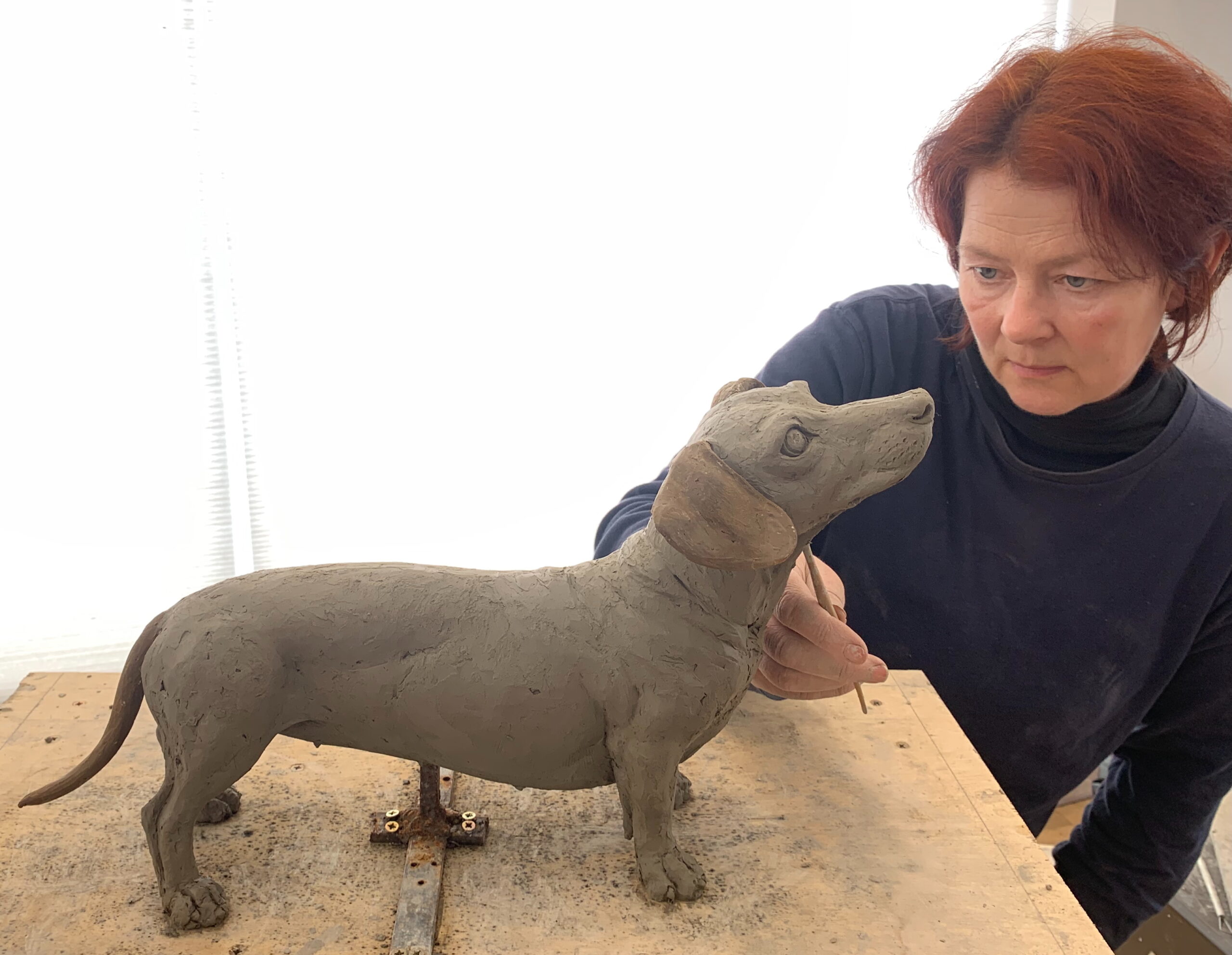
- Backiron: Clay is heavy and needs support. The to-scale model has a skeleton of welded steel bar, for strength and rigidity. But rigidity isn’t good for making changes later or feeling your way through a sculpture, so I add flexible, thick aluminium wire. This provides a bit of support, and I map out legs, chests, tails and heads with the flexible wire so that if I want to move them around later I can.
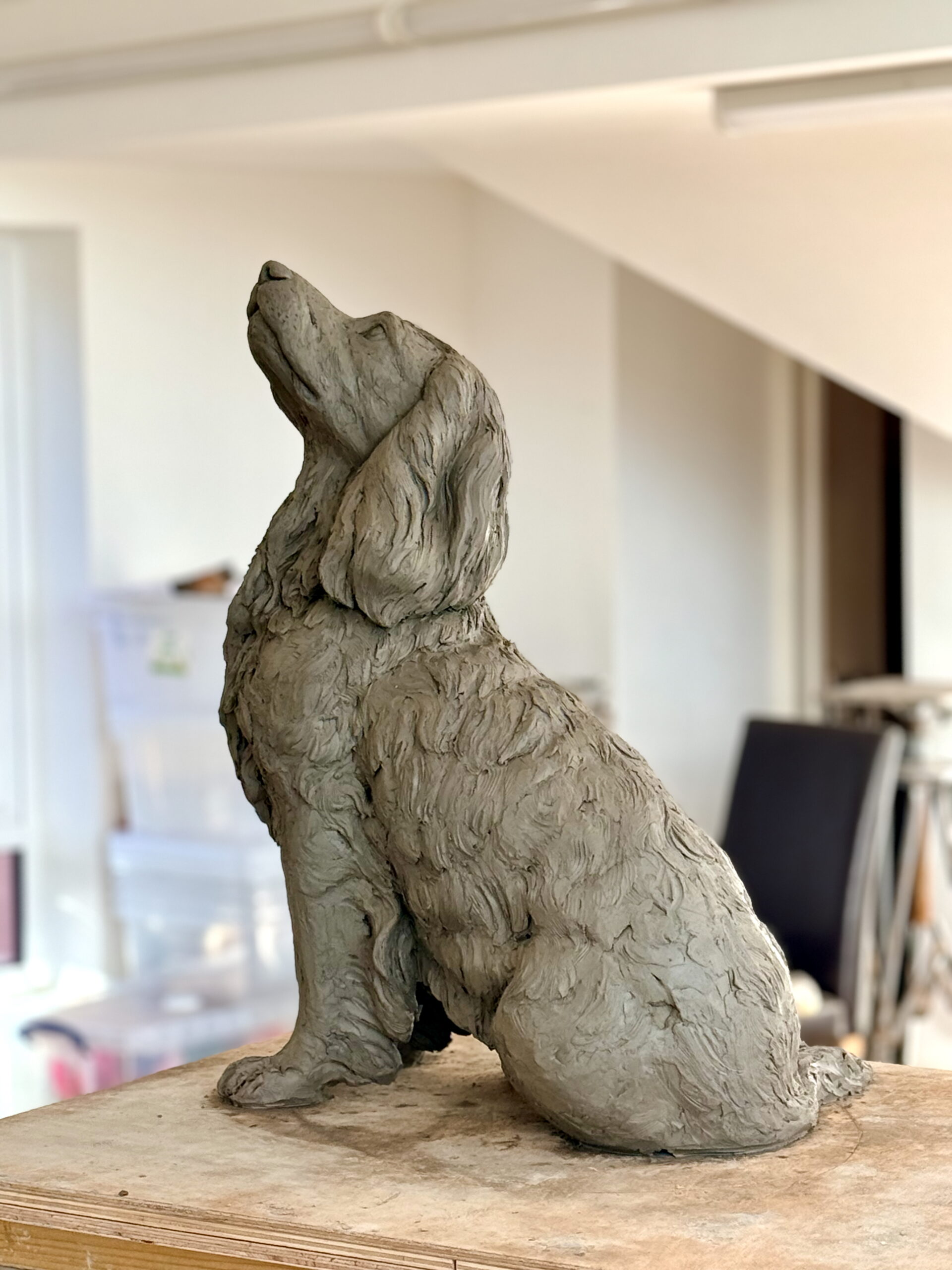
- Application of clay: Clay is a wonderful medium that can create incredible textures, shapes, lines and marks. It is the continual revision of your modelling, but also the preservation of incidental marks as the clay is applied, that captures the life, energy and essence of the piece. You try to capture in form the elusive emotion that the client feels when they think of a lifetime shared with their pet. I don’t try to capture perfect reality of a position – a photograph, a video or a 3d print can capture this. But I try to capture the composite experience of a life lived, with something emotively important, something alive, which has grown with you as you have lived and grown.
- Practicalities of modelling: A rotating work surface is one of the most valuable pieces of studio equipment. Being able to turn a sculpture allows you to check every angle as you work, making sure that changes on one side haven’t thrown the overall form out of balance. When you start to apply clay, it is your hands that remain the most fundamental sculpting tool, shaping clay with an instinctive, tactile quality that is hard to replace, and these marks are so personal to the sculptor. Most modelling work is done using hand tools, and there is a modelling tool for almost every task and texture. Many sculptors use old, hand-whittled wood tools with some flex for beautiful mark-making. And improvised makeshift ones with strange shapes, that make textures that are hard to achieve with the strong but slightly cookie-cutter tools available commercially.
- Moulding: My sculpture is destroyed during the next step, when we make a mould. Silicone rubber is applied in layers and then jacketed with a rigid casing. The mould sections are then removed and though my model is lost, castings can now be taken from the mould.
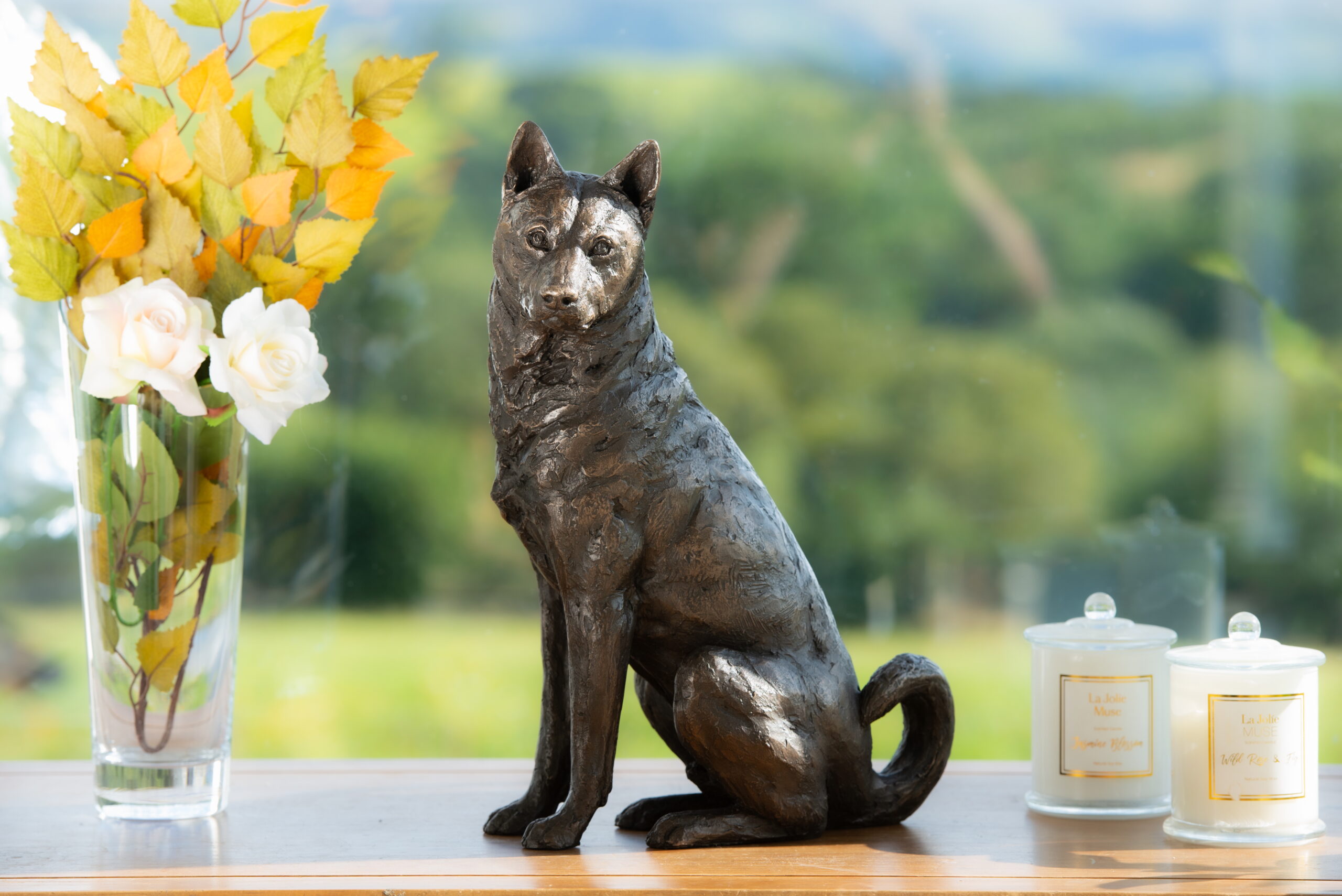
- Casting: I make sculpture in two materials: The most traditional, hard-wearing and expensive is Foundry Bronze metal. The rubber mould would be destroyed if you poured molten bronze into it, so we have to make a one use hot cast mould. First, a hollow casting in wax is taken from the rubber mould. That wax sculpture is cut into sections and wax runners for pouring the molten bronze are fixed to the sculpture. Now ceramic is applied over the wax model in layers, which dries into a heat-resistant mould. The wax is melted out and the hot molten bronze poured into the cavity through the runners. Once the bronze metal has cooled down, the ceramic shell is chipped away from the bronze cast. The bronze cast is cleaned up and the sections welded back together. The seams are worked with hand tools. Then the cast is coloured (called patination), with this chemical and heat antiquing that gives it the traditional bronze look. Bronze resin casting, also known as cold casting involves casting directly from the first rubber mould. It replaces molten metal with a mixture of bronze powder and liquid resin. Fibreglass and internal metal reinforcements are added internally, and the sculpture is hand-finished, polished to reveal the bronze surface, and sealed with protective wax. The result closely matches the look and feel of foundry bronze while being much faster, more affordable.
The pet sculpture is now finished! Phew.
“How much does a commissioned pet portrait typically cost, and what factors influence the price? Do you offer different sizes, styles or mediums to suit different budgets?”
- Price: A commission pet from me now costs between £7,800 and £25,000 all depending on the size. But I’ve been doing this for a long time, so my work is pretty well known, and I’m booked up for 17 months. I believe you can have them done for as low as £3,000 for starting sculptors, and as high as £60,000 for artists who have become famous for a particular type or brand of work. The prices make these kinds of pet portraits prohibitively expensive for many people. But there are so many possibilities to capture a pet. A prospective client on the cusp of losing their four-legged child may think of a statue at first, but there is a huge scale of different price points, down from an established specialist sculptor at the high point, down through paintings, through newer sculptors, through drawings, professional photographs, through etched metal and glass, or laser-cut wooden objects on Etsy. Even if you have next to nothing to spare, you can still have your beloved pet printed on your favourite mug, and when the colours on the ceramic fade, you can have a brand new one for a few pounds. On cost, those people with their hearts set on a sculpture can still find lookalikes, instead of paying for an expensive commission. Sculptures are often editioned, meaning that after the commissioner receives edition number one, someone else can purchase a copy at a much lower cost. It can be more challenging to find one that looks exactly like your own best friend, but the more commissions an artist has done, the more chance you have to find the right sculpture. I’d like to say that among some breeds, it’s easier because they all look the same – but I think I’ve now sculpted more labradors than anyone else on the planet – and all their faces are different! Somehow, despite how many there are of them in our collective homes, our own gorgeous dog isn’t just unique to us – it is far more different and special than we realise!
- Sizes, styles, and mediums to suit the budget. And also editions: Size and medium (in my case Bronze Resin or Foundry Bronze metal) are factors in pricing. They start to become less relevant the more well-known the artist is, as in the end they only have so much time. Small sculptures take nearly the same amount of time to sculpt as large ones! Style only affects price if you want the artist to work in a different style from what you can see they already do in their existing work. If I wouldn’t wish to create something in the style a client wants I would suggest an alternative artist, or slightly increase the price. If I do, (for example, I rarely get to work in semi-abstracted styles and I love to do so in my personal work), then I will offer a discount. The primary method of discounting though is through offering an edition – the ability to sell copies after the commissioner has their edition number 1. A unique, or 1 of 1, statue costs significantly more than an editioned commission. For me, a unique pet portrait costs 3-4 times more.
“What advice would you give someone thinking about commissioning a pet portrait for the first time? How can they help you create the best possible likeness of their pet?”
- Taking measurements now: Sadly, we don’t know when we will lose our friends, so if you are thinking about a commission, taking some immediate action by doing some measurements might make all the difference. The most helpful measurement is a straight measurement from the shoulder (the withers) to the ground. And I have some free guides available online for other ones. It is also helpful to keep a record of your pet’s weight. Both of these will help the artist get a sense of their size and volume relative to breed standard, and are particularly important if your pet is a crossbreed.
- What do you want? Otherwise, I think preparing is a matter of getting a sense of what you want. Whose work do you like? Where might you want to place your statue, and how do you want it to feel as an artwork? Likeness is about the availability of reference material and an artist’s skill and eye. But lifelikeness is about the artistic choices they make. A great deal of the client’s motivation is memory and its preservation. When something has shared your home and your heart for so many years, and at the same moment too short a time, we seek to hang on to whatever we can. If you can describe in words and pictures what you want from your pet portrait, then you can brief an artist 🙂
“Have you created portraits for any well-known or celebrity clients? If so, what was that experience like, and are there any projects you’re able to talk about?”
- Celebs etc: I’ve made fewer works for celebrities than I’ve have for high-ups in well-known brands, though I can’t really talk about those. One I can talk about is sculpting A Street Cat Named Bob for James Bowen, which involved a big international fundraising campaign. The trials and tragedies, and the enormously uplifting parts of their story together led to a lot of interest in the sculpture, and I get messages from Bob’s fans who’ve come to London to see his memorial. James was just like every other client when he spoke with me about getting Bob just right, but speaking to so many well-wishers from around the world was a wonderful and deeply heartwarming experience.
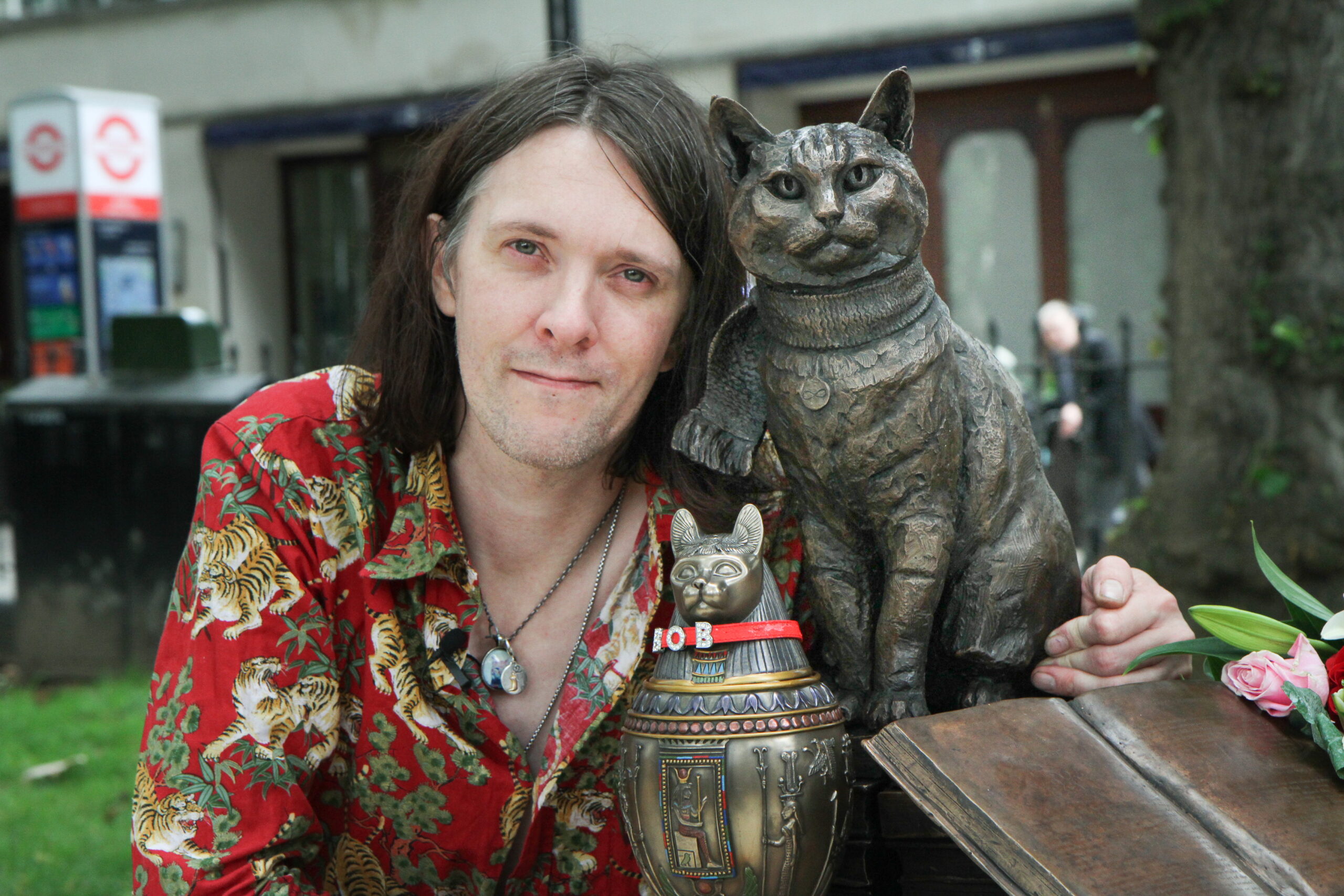
“What’s the cutest, funniest or most heartwarming story behind a pet portrait you’ve been commissioned to create? Is there one that has stayed with you?”
- For me: the thing that makes my heart feel full is hearing about dogs who have been rescued, like Lola and Maddie, and found a forever home with a warm, caring family. Seeing pictures of them on holiday on the beach, enjoying the sand and sleeping in the shade – living their best lives, is what it’s all about for me. My own girl Asha was the whole reason I became so enamoured with sculpting dogs in the first place ( I sculpted her 4 times!) – and is also why I focus on raising money for animal welfare charities. She was a rescue staffie, back when they were the biggest ‘status breed’ and being abandoned left, right and centre. I got her from the wonderful Battersea Dogs and Cats Home, and when I saw her for the first time, looking so sad with her head leaning against the bars, a little bare patch where her fur had rubbed off from leaning it there so long, I knew I had to bring her home. I queued up, and my heart nearly stopped working when I saw that the person standing in front of me had her number, the number I had written down. And then it turned out Battersea had two floors! And Asha came home and became my first forever dog, for 17 wonderful, rowdy years, and the biggest thing in my life.
- Beyond that: Not all of them are heartwarming in that way. The sentence I read the most is, ‘I just lost my pet, and I am heartbroken.’ And I stand as an onlooker and sympathetic shoulder to an experience that all of us as pet lovers are destined to experience, eventually. Sometimes it is the pet that symbolises our own mortality, or captures some precious essence of surviving the loss of our most loved people, like the memorials for two different families in the USA, who each lost their daughters, separately to violence, and to cancer. Their dogs were so beloved to each woman, the dog’s inclusion in the monument, was a reminder of love, hope and joy. The loss and pain were just blown away by the shining devotion of their loved ones, and their beautiful individual relationships with their dogs. It makes me cry, I’m crying now, but it’s happy crying.
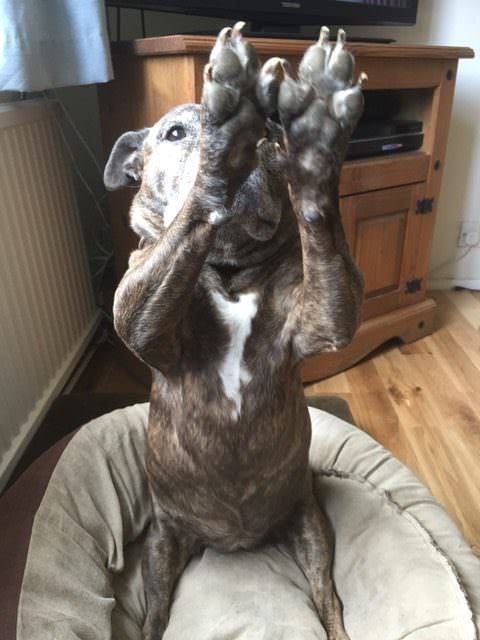
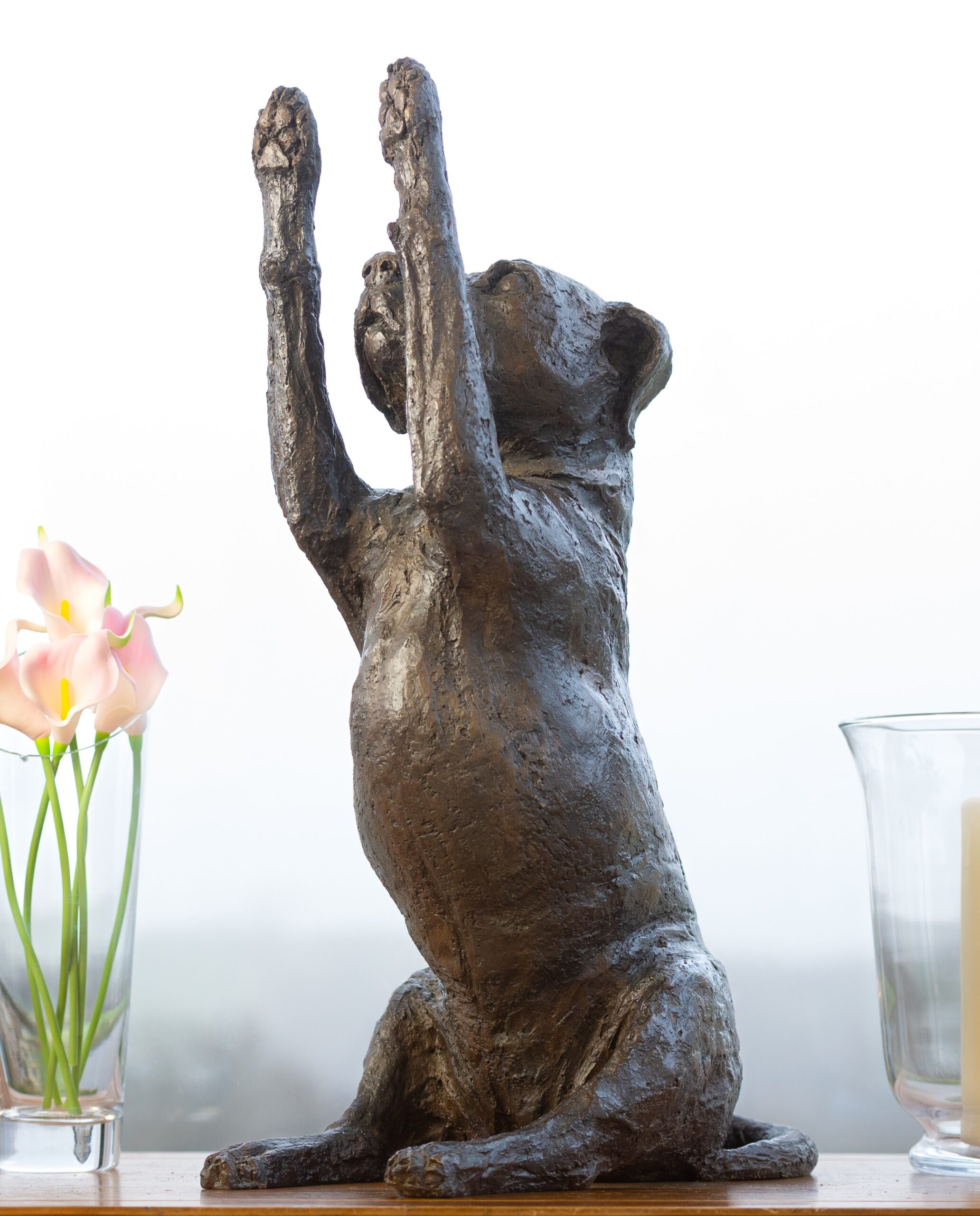
“Pets often have unique personalities and little quirks. How do you capture those traits in a portrait, rather than simply creating a realistic likeness?”
- Perspective as a collage: Most clients begin with a single word that captures the essence of their pet – loyal, silly, fast, happy, focused or muddy – and I can build a sculpture around that feeling. But it is the hundreds of photographs they share, often spanning almost their pet’s entire life, that really bring the portrait to life. I return to those images again and again as I sculpt, absorbing not just how the dog or cat looked, but who they were. Clients are wonderfully specific about the details they want preserved: the ridges in the fur, the tiny moles, the way an ear flops, or the lift of an eyebrow. Those perfect imperfections are what transform a sculpture from a simple likeness into something that truly feels alive. With that lifetime of photographs at my fingertips, I’m not recreating one exact moment or one particular image. Instead, I’m drawing together the character, memories and spirit of their pet from across the years to create a portrait that reflects the client’s experience of their life together.
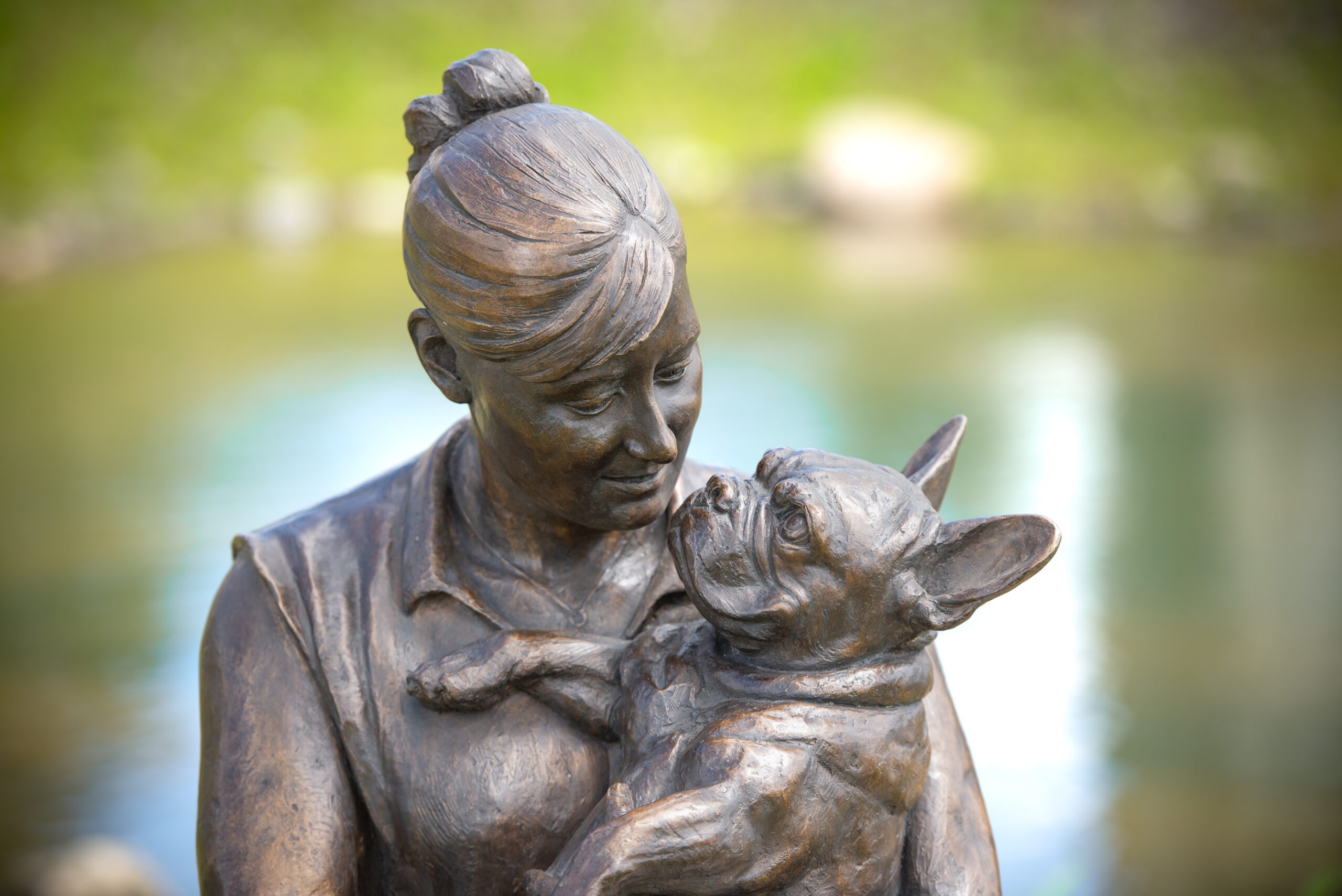
“Why do you think pet portraits have become so popular? Have you noticed any trends in the types of commissions you’re receiving or the reasons people are choosing to commission them?”
- I think as the years have gone by over the course of my career, I have watched people becoming more inclusive, with pets much more likely to be seen as crucial members of the family; more people have furry children. A much wider variety of treatments and operations being offered by vets, there is a far greater recognition of intellectual and emotional welfare. We are buying more tailored pet foods, paying for more dental hygiene, throwing more balls and playing more tuggi. The UK government has tightened breeding rules and welfare legislation. There are far fewer dogs outside homes, and many more on beds. And as our respect for all animals, alongside our pets grow, we are honouring them not just as working animals but also more as partners and family. The pet portrait is one little piece of a wider experience that is now nearly universal. That journey is one of happiness, followed by loss and grief, and with time that moment when only our good memories and our gratefulness to them remain. Where we can be at peace with everything we shared with our beloved pet, maybe enough to start it all over again.
Follow The Artist
Keep up to date with Tanya's latest work!